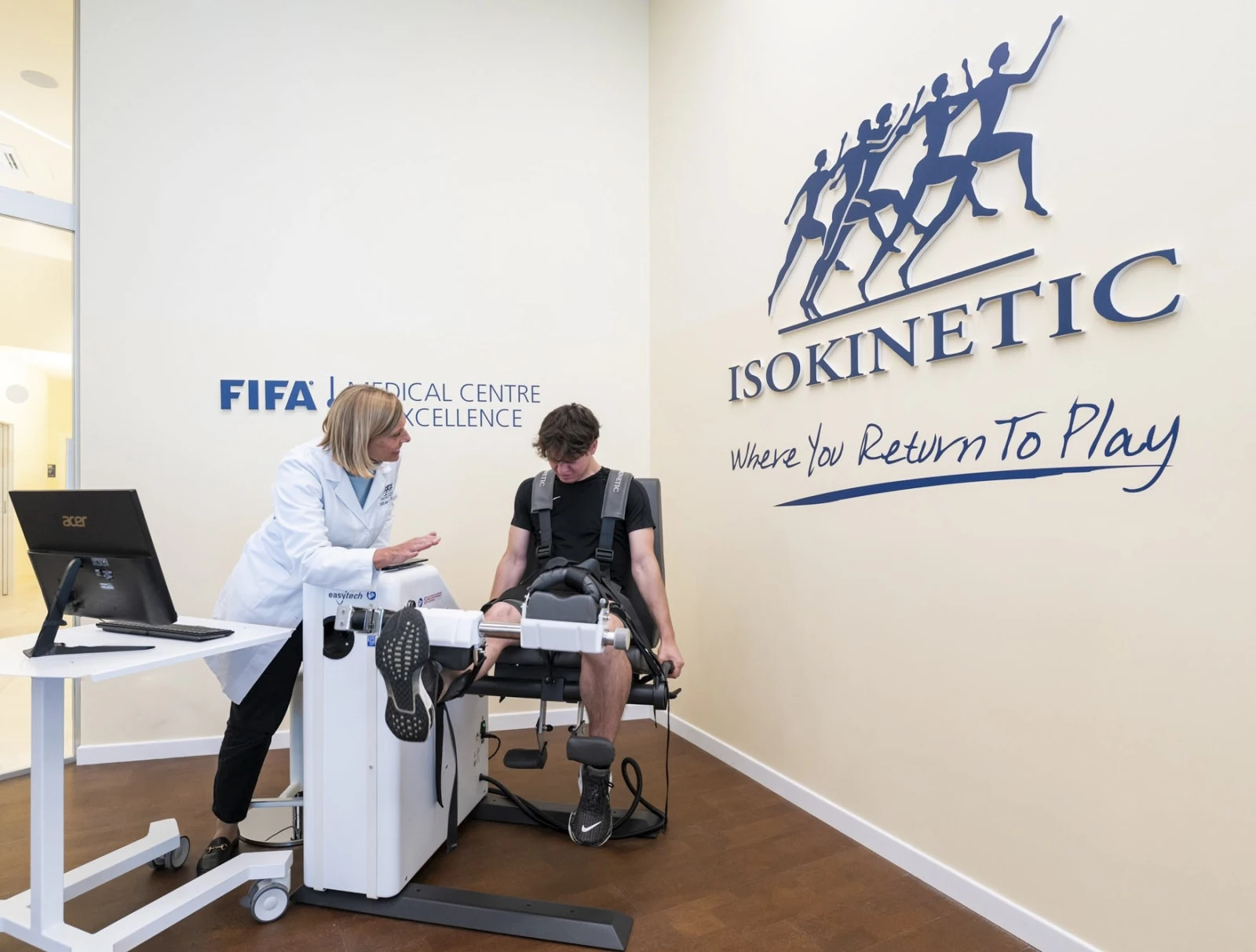
Some of the world’s best athletes prevent injuries and recover at Isokinetic's high-level rehabilitation clinics. Like them, cork is extremely resilient. But there are other reasons why this material was chosen for Isokinetic’s new clinic in Milan: namely, its fire resistance (the clinic is located in a tall building, in the city centre), its impact absorption capacity and, of course, its sustainability. Isokinetic recently opened a new clinic in Milan, but has a long history. It was founded by Dr Stefano Della Villa, in 1987, when he opened the first rehabilitation clinic for athletes in the city of Bologna. Trained in the United States, Della Villa became familiar with isokinetics - a rehabilitation methodology based on muscle contractions at a constant speed, regardless of the force applied - and, when he returned to Europe, he realised that the old continent was light years behind, compared to what was being done abroad. He decided to acquire the American technology and opened his first clinic from scratch, in partnership with his brother Giacomo, the architect responsible for designing the projects. With 11 FIFA-certified rehabilitation clinics, most of them located in Italy, as well as units in London and Greece, Isokinetic has a leading research centre, which reinforces its commitment to the science of movement. As Giacomo Della Villa explains, ‘The mission is clear: to help athletes prevent serious injuries, both in training and in competition.’
Comfort and safety
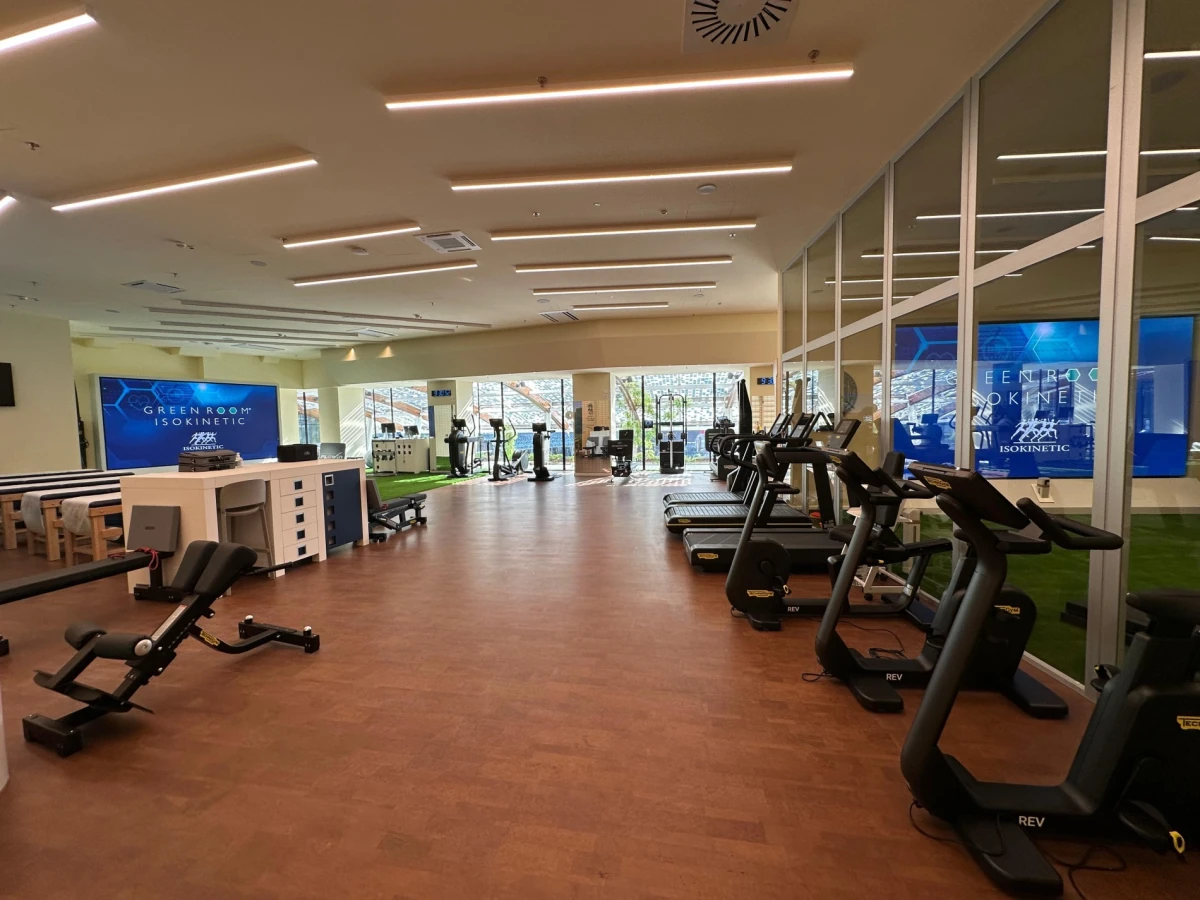
At the new clinic in Milan, the choice of flflooring proved crucial. It was a careful decision: “The main reason was based on cork’s natural attributes - it is anti-allergenic, easy to clean and sustainable. We also wanted to create a comfortable environment where people feel at home, different from the usual flooring solutions used in large commercial spaces. This flooring is pleasant to the touch and is soft even when barefoot or wearing training shoes, something that we notice as soon as we enter the space.” Months after opening, the user experience has been unequivocally positive. It was the right choice: ‘They feel the comfort, the quality of the materials, and realise that everything has been thought out with great attention to detail. We believe that the flooring has a direct impact on the rehabilitation experience, promoting well-being, safety and a feeling of welcome that is fundamental to the success of the treatment,’ explains Della Villa.
Positive impact
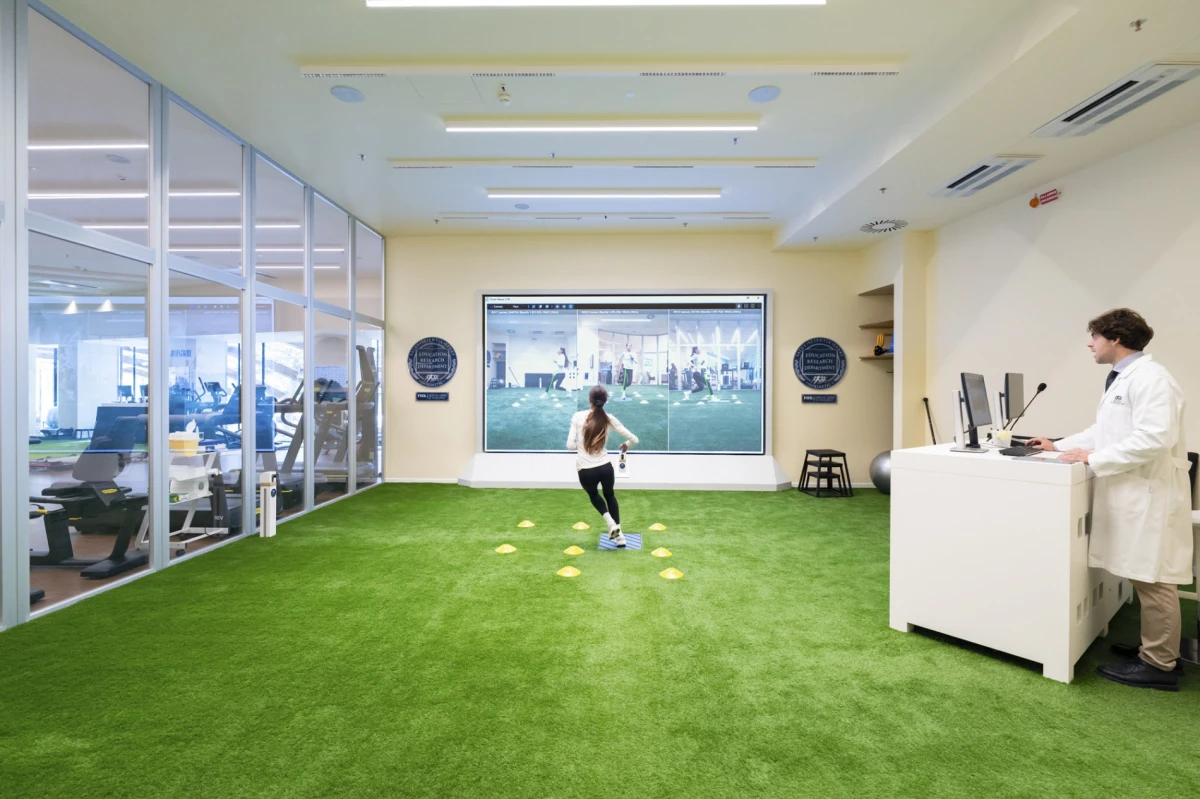
One of the characteristics of the new clinic is the combination of sustainability and innovation – something it shares in common with cork. The clinic has a Green Room, where training sessions are simulated on artificial turf. From 2026, FIFA will impose restrictions on the use of PVC in turf, and Isokinetic is already thinking about the solution. ‘We are conducting tests to ensure that the solution offers the best possible performance. If the results are positive, cork will also be used in the Green Room.’ On this path to sustainability, cork “has a promising future. For an architect like me, it can go as far as creativity takes it. But it is important that the designer knows and falls in love with the material, in order to use it in the best possible way. Cork has potential not only as flooring, but also in other architectural and decorative applications.”