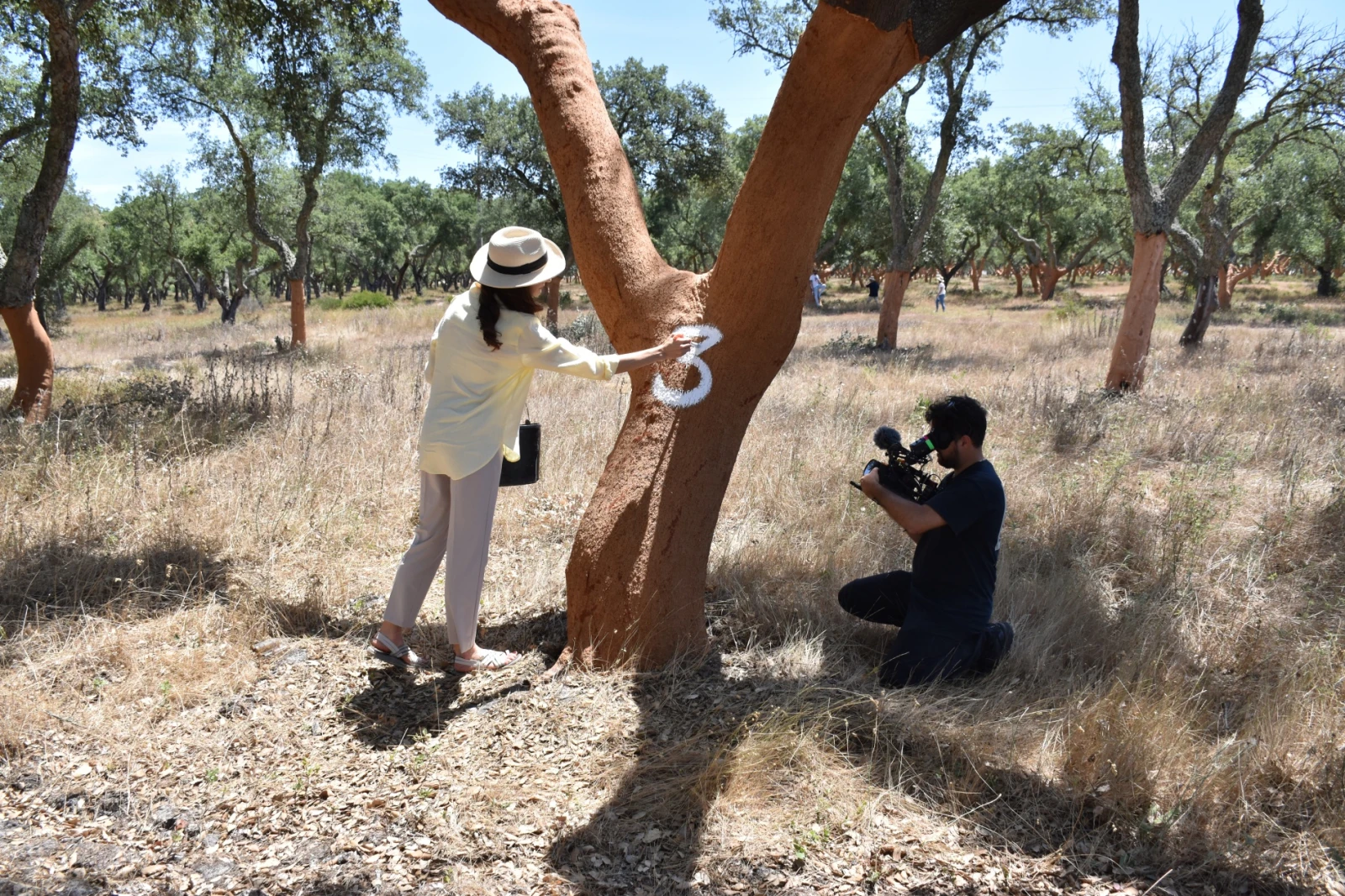
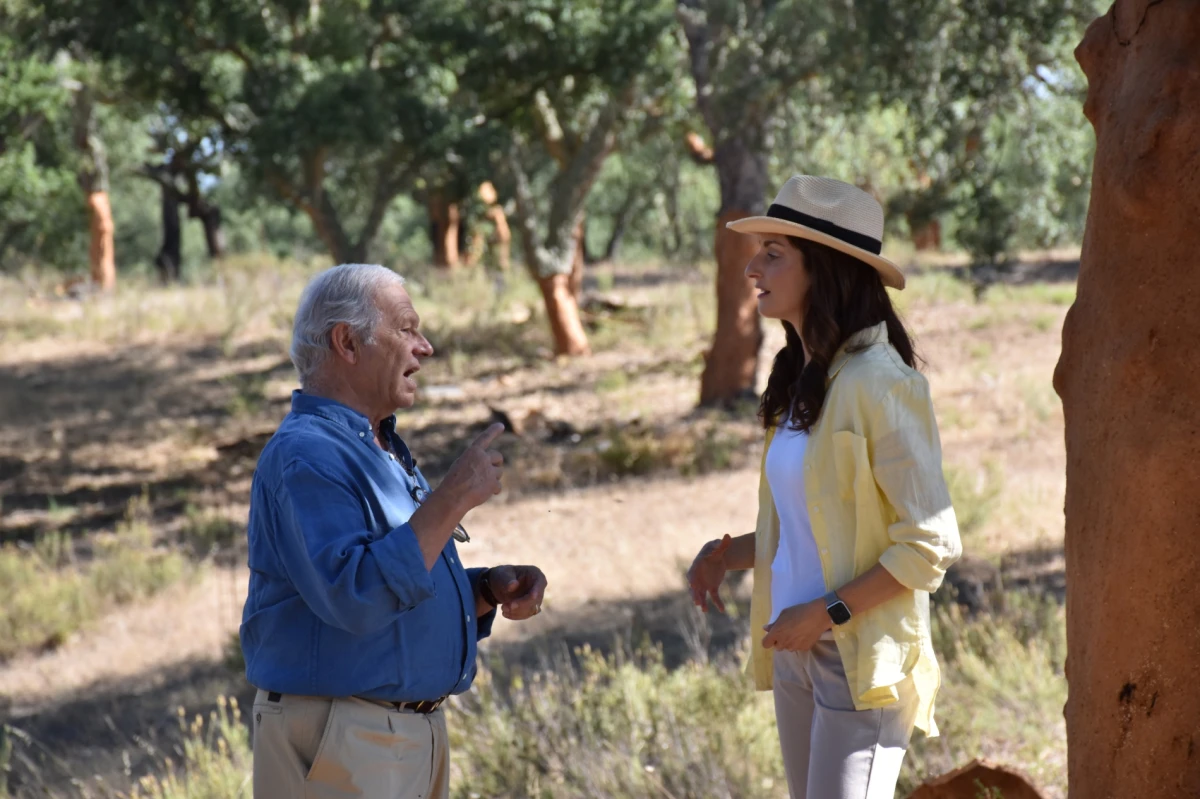
Laura Donadoni is a leading figure in the world of Italian wine and communication. A journalist, renowned sommelier, author and wine educator at leading universities, she combines her passion for wine and gastronomy with a solid academic background, including a PhD in Communication Sciences. Based on her charisma, knowledge and curiosity Donadoni has conquered the world of wine - from Italy to the United States, and therefrom to the entire world, through her digital platform, The Italian Wine Girl – the moniker by which she is known. The Italian influencer and wine expert visited Portugal, where she immersed herself in the cork oak forest (“Montado”) and gained first-hand experience of Corticeira Amorim, as she later disclosed in her series ‘The Guardians of Cork’. The trip transformed her perception of cork, since it enabled her to discover the profound connection between the forest, the cork oak tree and cork itself. She revealed that her discovery of this unique ecosystem - a reservoir of biodiversity and a pillar of wine culture - has changed her awareness of cork, highlighting the fact that cork stoppers are not only the best possible seal for each wine, but also a powerful symbol of tradition, regeneration and respect for nature.
What is your earliest memory of cork?
My earliest memory of cork is linked to wine, long before I started working in the industry. I remember the popping sound of a bottle being opened at the family table - that small, timeless gesture that marks the beginning of a shared moment. Back then, I didn’t think of cork as a material with a history, a landscape, or a culture behind it. It was simply part of the wine ritual. It was only later that I began to understand its depth.
What surprised you most about this trip to Portugal, that enabled you to become immersed in the world of cork?
It was the feeling of discreet mastery that surrounds the cork harvest. I was expecting a technical process, but encountered an ancestral choreography. The work proceeds in silence, at dawn, with an almost sacred respect for the trees. I wasn’t prepared for that level of patience, precision and humility. It’s closer to a cultural legacy than the extraction of a raw material.
How did visiting the cork oak forest (“Montado”) change your perception of cork?
Visiting the cork oak forest made me realise that cork is not a product, it’s an ecosystem. Walking through that landscape was revelatory. You understand that each cork stopper begins decades earlier, and is shaped by the climate, biodiversity and human management. It changed my perspective - from an object to a life cycle, and from a technical component of wine to a form of environmental responsibility.
As a wine expert who has had access to a different and deeper experience of cork, what would you highlight about the symbiotic relationship between wine and cork? What has changed in your perspective since your collaboration with Corticeira Amorim?
The symbiosis between wine and cork is much more than the management of oxygen ingress or ageing potential. It’s a question of continuity. Both wine and cork are agricultural expressions that depend on time, respect for nature and human sensitivity. After this experience in Portugal, I see cork less as a seal and more as an extension of the terroir. It carries its own geography, its own rhythm. This understanding has deepened the way that I talk about wine and the invisible work that protects it.
If you had to choose just one advantage, or characteristic, of cork stoppers, what would it be?
Their humanity. Cork is imperfect in the most beautiful way: natural, unique, never the same. It reminds us that wine is not an industrial product. It’s a living being that breathes through something that is equally alive.
As a journalist and communicator, do you feel an added responsibility as a “guardian of cork”?
I feel a responsibility to safeguard subtleties. In a world obsessed with convenience and shortcuts, it is easy to forget the long and fragile chain behind natural materials such as cork. My role is not to promote it, but to tell the truth about what I have seen: a sustainable system, a cultural landscape and a craft that deserves to be understood before being judged. If that makes me a ‘guardian’, it is simply because stories are one of the few ways to protect what is important.