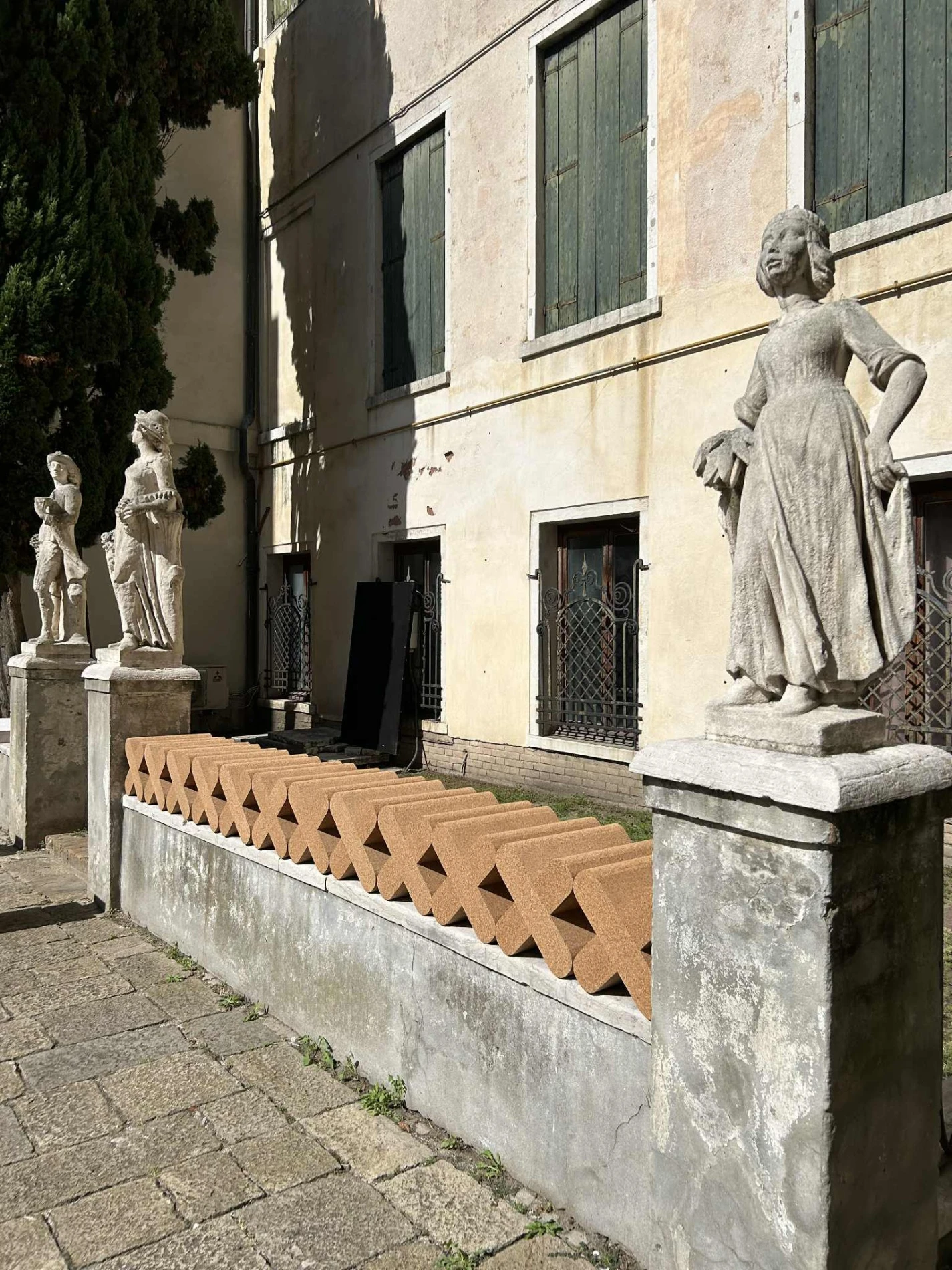
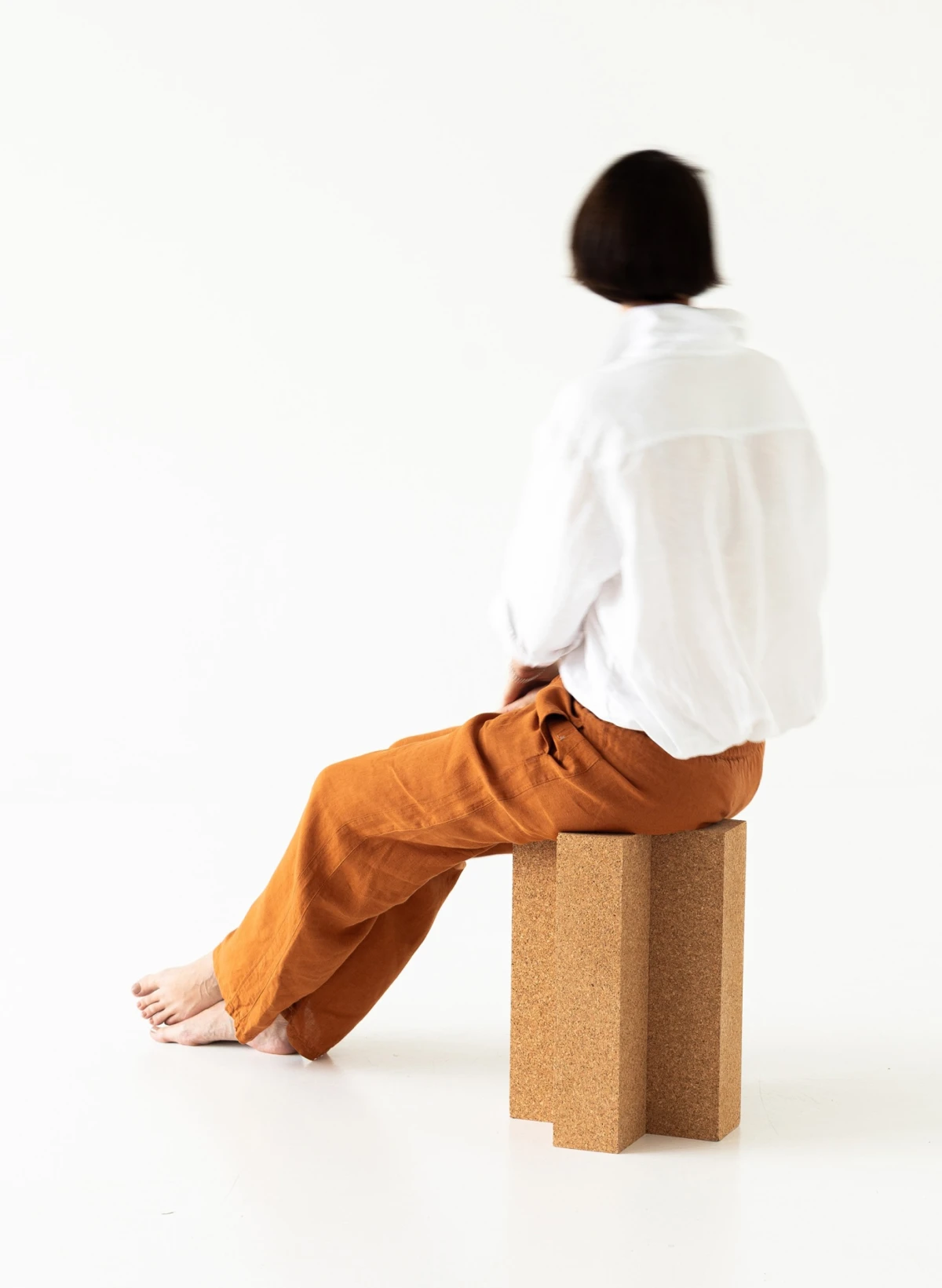
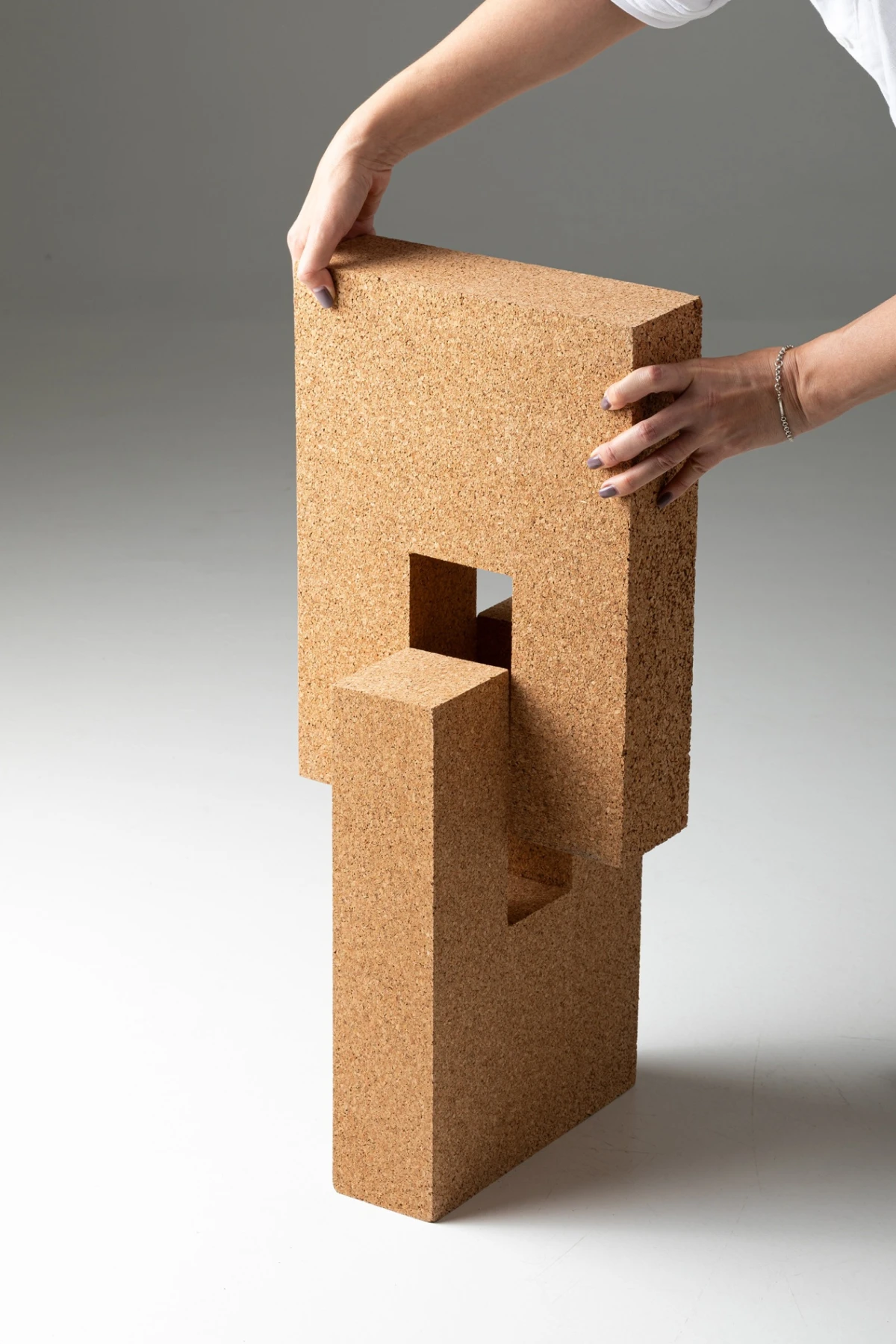
Conceived as a bench, Cork Cross explores modularity as a core design principle. Composed of two intuitively interlocking cork blocks, each 10 cm thick, the piece forms a solid and contemporary object made entirely from cork. Developed according to an architectural and modular design, Cork Cross demonstrates cork’s capacity to meet practical, sensory and environmental demands simultaneously, positioning itself as an innovative contribution to contemporary cork furniture design.
Increasingly embraced in urban contexts, modular design responds to the demand for efficient, space-saving solutions. Cork Cross aligns this approach with a commitment to sustainable design, addressing contemporary lifestyles and the growing need for products that combine versatility, durability and environmental responsibility.
The project was developed through a collaboration between Dr Jūratė Tutlytė, curator of the Lithuanian Pavilion at the 19th Venice Architecture Biennale, the New European Bauhaus (NEB) Creative Interdisciplinary Research Centre at the Vilnius Academy of Arts, and Corticeira Amorim. Cork Cross was presented at the Lithuanian Pavilion under the theme “Archi / Tree / tecture”, as part of the Biennale’s official programme.
Throughout the exhibition, the bench was used during various events, enabling visitors to directly experience its strength, comfort and tactile qualities. The consistently positive feedback highlighted the relevance of continuing research into the diverse applications of cork and its potential to generate broader cultural, environmental and social impact.