London
London Design Biennale: cork as support for the world’s to-do list
During development of the project, it became obvious that we needed to work with materials that convey a sense of empathy and robustness within the forest. Cork seemed the obvious choice, due to its wooden tones and smooth texture, and its inherent sustainable nature - as a renewable and biodegradable material.
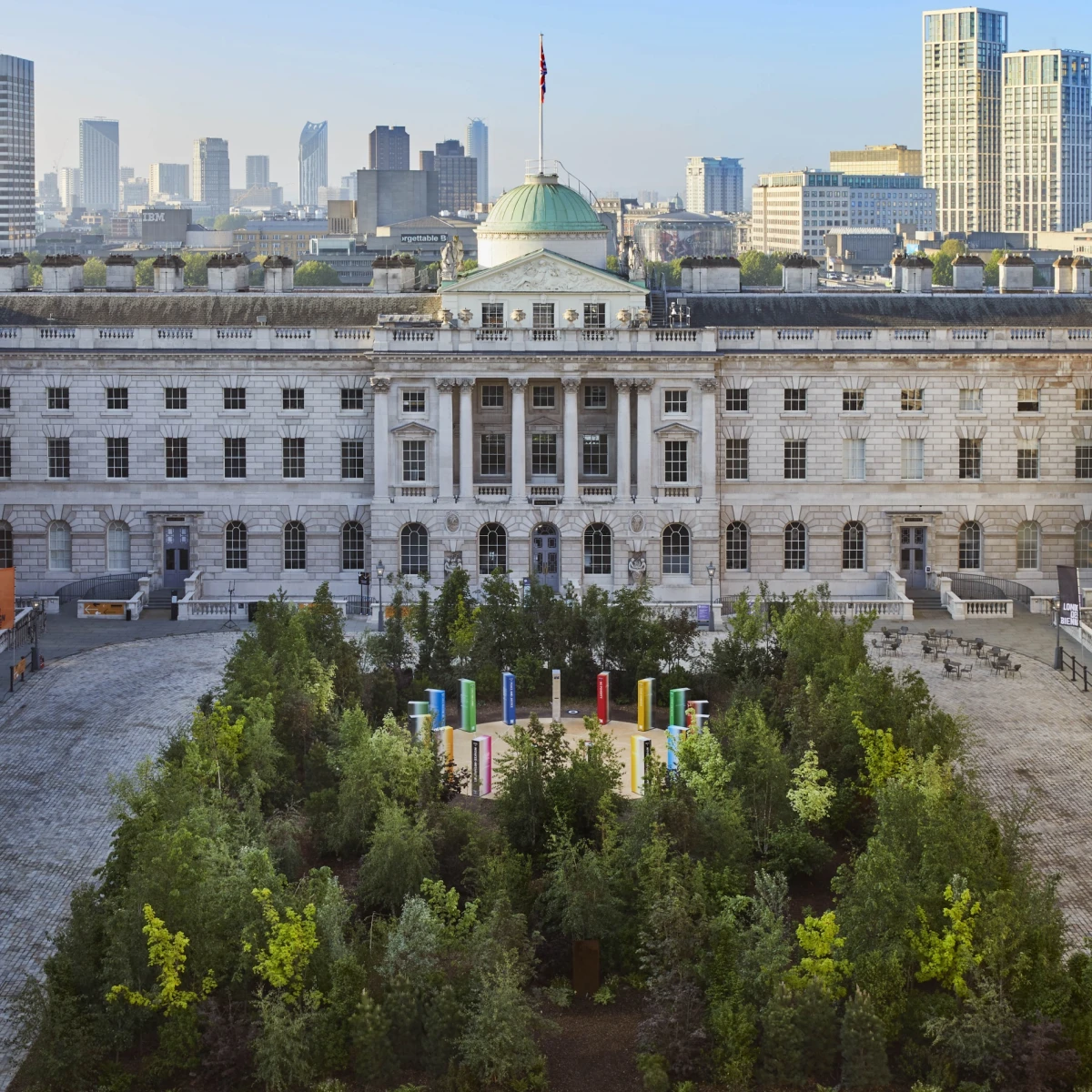
A forest of 400 trees in the centre of London. An artistic intervention that is driving change. Cork is supporting, and encouraging, the world that we want to build, in the project, Forest For Change – The Global Goals Pavilion, an interactive installation in Somerset House, the heart of the London Design Biennale 2021.
The installation off ered an oasis of tranquillity in the middle of London, and was also an inspirational provocation. In the 18th century, when Somerset House was fi rst built, trees were prohibited from entering the grounds of the London palace. But in the 2021 edition of the London Design Biennale, the situation was reversed and nature erupted in the heart of the city, in Forest for Change – The Global Goals Pavilion, the central installation of the Biennale, held in June in the British capital.
Corticeira Amorim was the “Offi cial Material Partner” of the initiative, that was conceived by the British designer, Es Devlin, and is powered by the non-profi t agency, Project Everyone. The pavilion, one of the most emblematic interventions in this year’s edition of the London Design Biennale, included a central circle-shaped core, built entirely from Portuguese cork. It was in this interactive space that visitors were able to learn about and increase their knowledge of the UN Sustainable Development Goals (SDGs). Jack Headford, Associate Designer at ES Devlin Studio, explains: “We proposed the idea of introducing a young forest within Somerset House as a provocation, aimed to inspire and maintain the wave of environmentalism, showing visitors the possibility of what this can involve”.
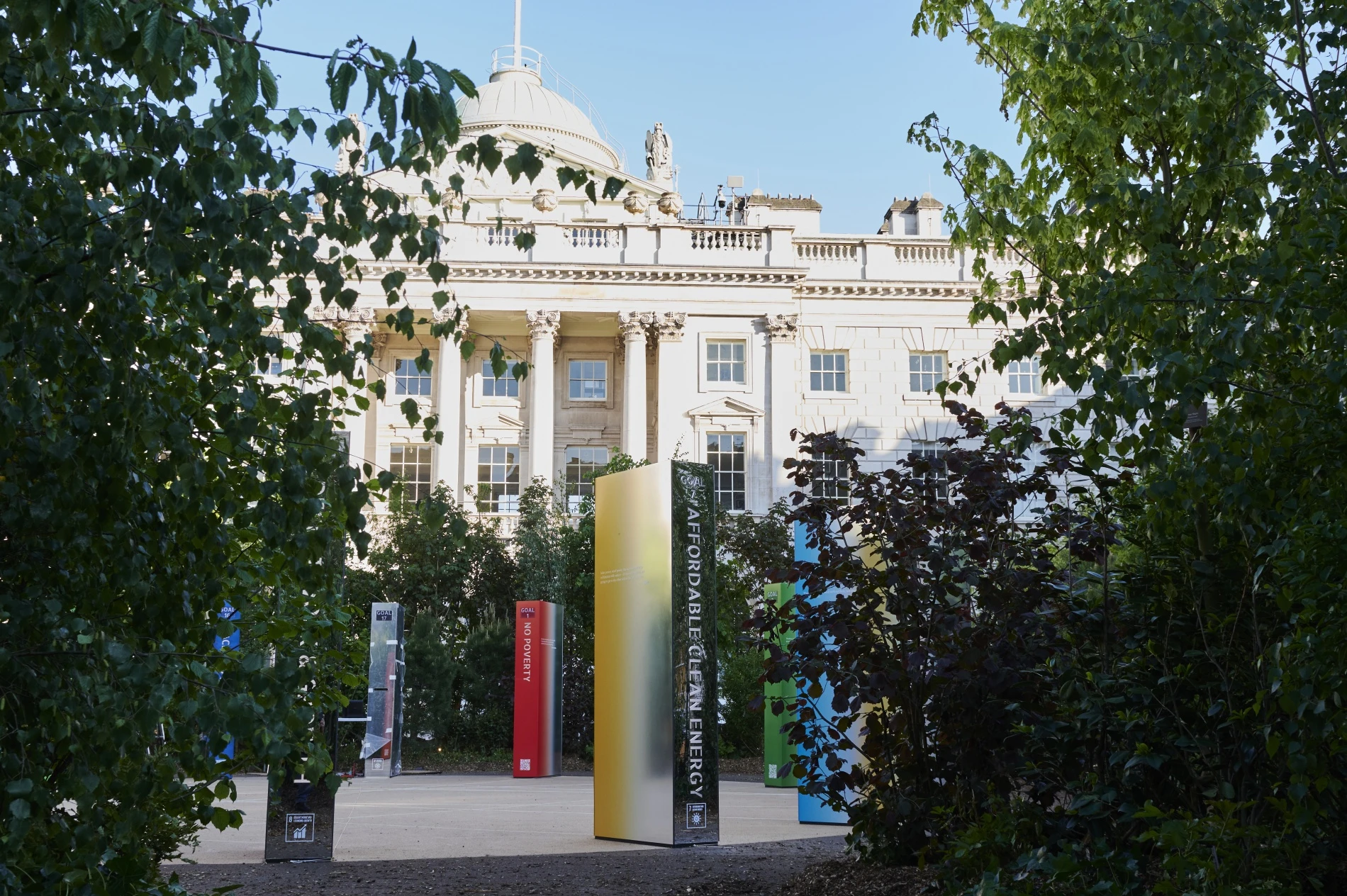
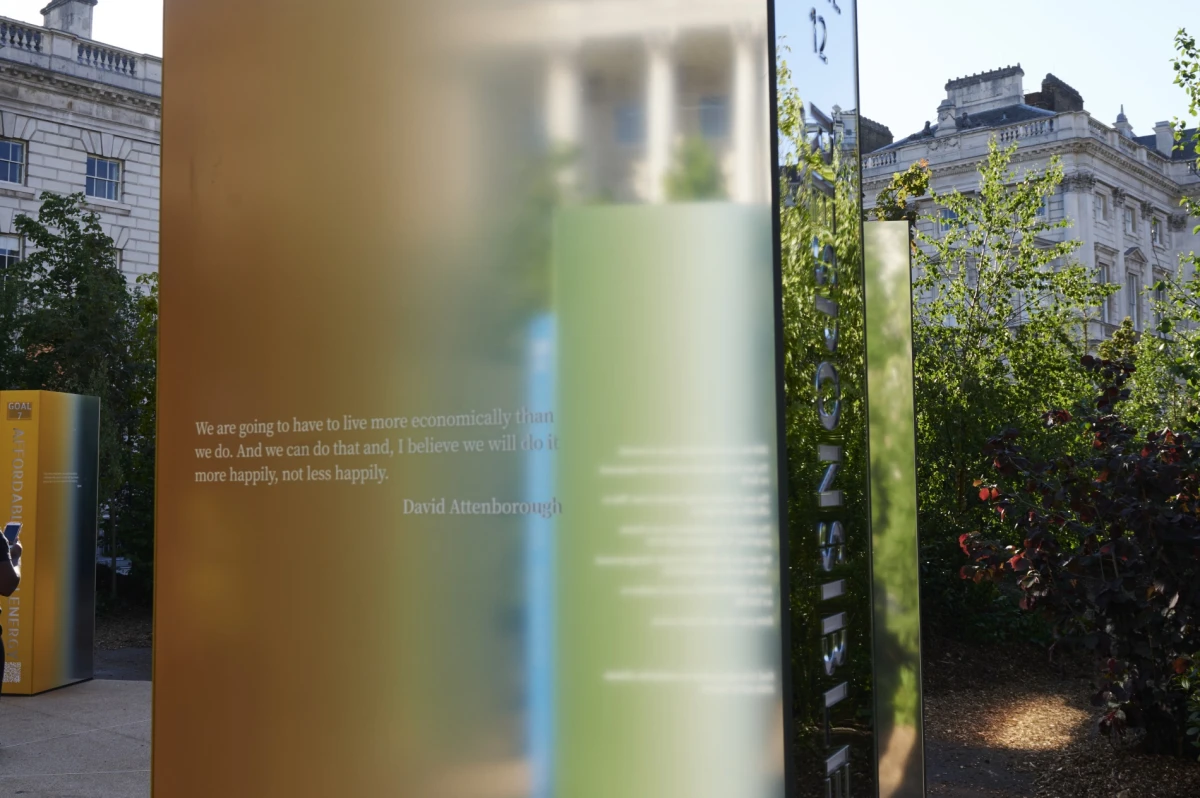
The heart of the forest revealed an infrastructure consisting of 17 mirrored pillars representing each of the SDGs. Each pillar provided quotes, reports and facts to demonstrate the reasons why the Sustainable Development Goals are on the world’s to-do list. The journey ended with the 17th pillar, that represented the Partnerships for the Sustainable Development Goals, which invited visitors to record a short testimony expressing the changes that they would like to see achieved within the framework of their favourite Goal.
Photo: © Ed Reeve